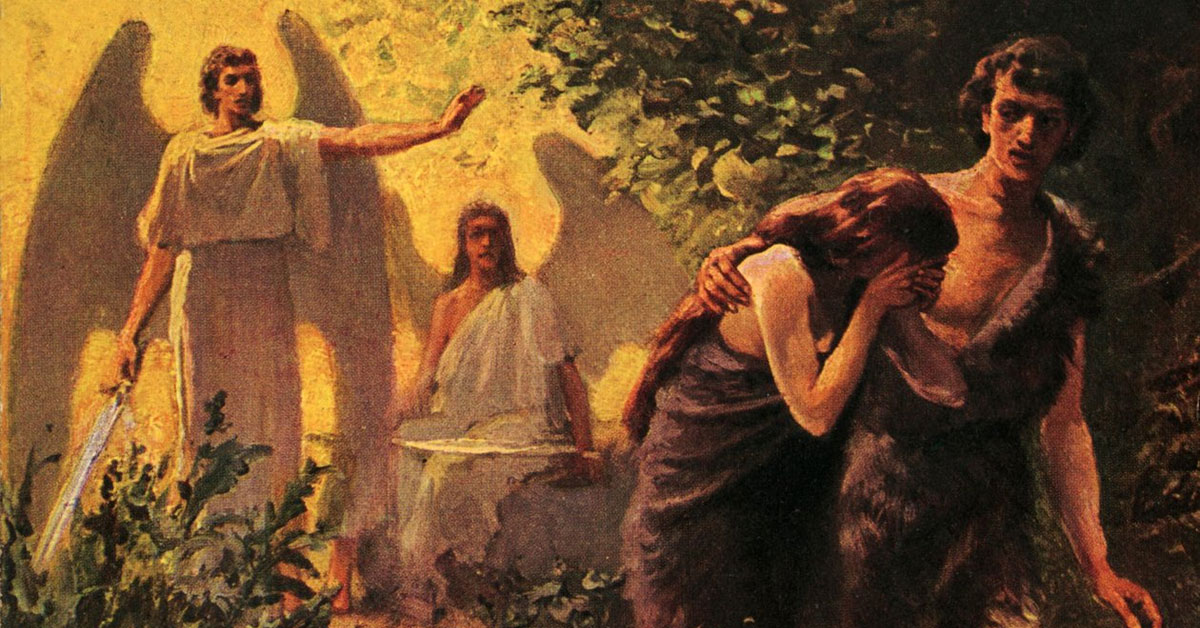
God placed the Tree of the Knowledge of Good and Evil in the Garden of Eden not as a trap, but as a deliberate teaching tool designed to help Adam and Eve develop moral character, free will and wholehearted devotion to Him. Scripture shows that God desires worship that flows from genuine love and understanding—“true worshippers shall worship the Father in spirit and in truth” (John 4:23). For humanity to reach that level of mature, willing obedience, they needed the opportunity to choose righteousness over evil, even when disobedience appeared attractive.
The tree provided that opportunity. It established a clear boundary that would teach obedience, patience and restraint. While the Tree of Life represented the gift of ongoing physical life (Genesis 2:9), the Tree of Knowledge was intended to teach them how to live that life in righteousness. By giving a specific command not to eat from it (Genesis 2:16–17), God gave His children the chance to choose loyalty to Him over their own impulses. Without a meaningful alternative, Adam and Eve could not have exercised real moral freedom.
This is why the presence of the tree was essential. God does not create “robots.” To be made in His image, humans had to possess the ability to reason, choose and even disobey. If God had made the understanding of good and evil instinctual, they would have been incapable of choosing otherwise, and moral freedom would have been impossible. Real choice requires at least two options and the possibility of choosing wrongly. Without the forbidden tree, Adam would have had no meaningful way to demonstrate sincere, unforced allegiance to his Creator.
This also created the valuable lesson of the permission of evil. God did not author evil, but He permitted it so humanity could learn—through experience—how terrible sin truly is. Adam and Eve had information about sin, but they did not appreciate its horrors. Now, however, all mankind knows firsthand the suffering, pain and destruction that sin brings. This experiential knowledge is part of God’s long-term plan to produce an eternal appreciation for righteousness. Scripture affirms that God uses even painful experiences to produce lasting discernment (Romans 8:28; Hebrews 5:14).
This educational process continues into the future. During Christ’s 1,000-year reign, when “Thy judgments are in the earth, the inhabitants of the world will learn righteousness” (Isaiah 26:9), Satan will be bound and humanity will be healed physically, emotionally and spiritually from the effects of sin (Isaiah 35). At the end of that Millennium, Satan will be released briefly to test the restored human race (Revelation 20:7–9). By that time, mankind will fully understand the difference between good and evil. When confronted with temptation, most will choose obedience, demonstrating the wisdom of God’s permission of evil. Those who stand firm will be proven to love God with mature conviction, having His law written in their hearts and minds (Jeremiah 31:33).
Finally, the tree shows that God’s plan was proactive, not reactive. Because He is omniscient, man's fall did not surprise Him. Jesus is described as “the Lamb slain from the foundation of the world” (Revelation 13:8), revealing that the remedy for sin was already in place before Adam and Eve were created. In this light, the tree served to initiate the process by which humanity would eventually gain an obedience not based on innocence or ignorance, but on experience, understanding and freely chosen loyalty.
Additional Resource:
Christian Questions Podcast
Episode #1362: “Why the Tree of Life and the Tree of Knowledge?”
Uncovering many reasons those two trees were in the Garden of Eden
Preview Video
CQ Rewind Show Notes
Related Questions
January 30th 2019 | 40515 views How can you know when God has forgiven you fully?
July 10th 2024 | 33494 views Can you explain Hosea 6:1-3?
July 31st 2014 | 40113 views Please explain Matthew 10:1-16. Why did Jesus send his apostles only to Israel? Why will it be better for Sodom in the judgment day?
September 17th 2015 | 40180 views Please explain 1 Thessalonians 4:16, 17. Are the shout, the voice of the Archangel, the trump of God, the clouds and the air literal or symbolic?
October 23rd 2017 | 41911 views There is so much corruption in world governments. Are there scriptural admonitions that point to proper governing of countries?
February 23rd 2023 | 60695 views How many will make it through the last days?
April 18th 2017 | 40496 views Is judgment day at the time of passing? And "judgment day" will be for all that is on earth when our Lord returns?
November 03rd 2014 | 40381 views