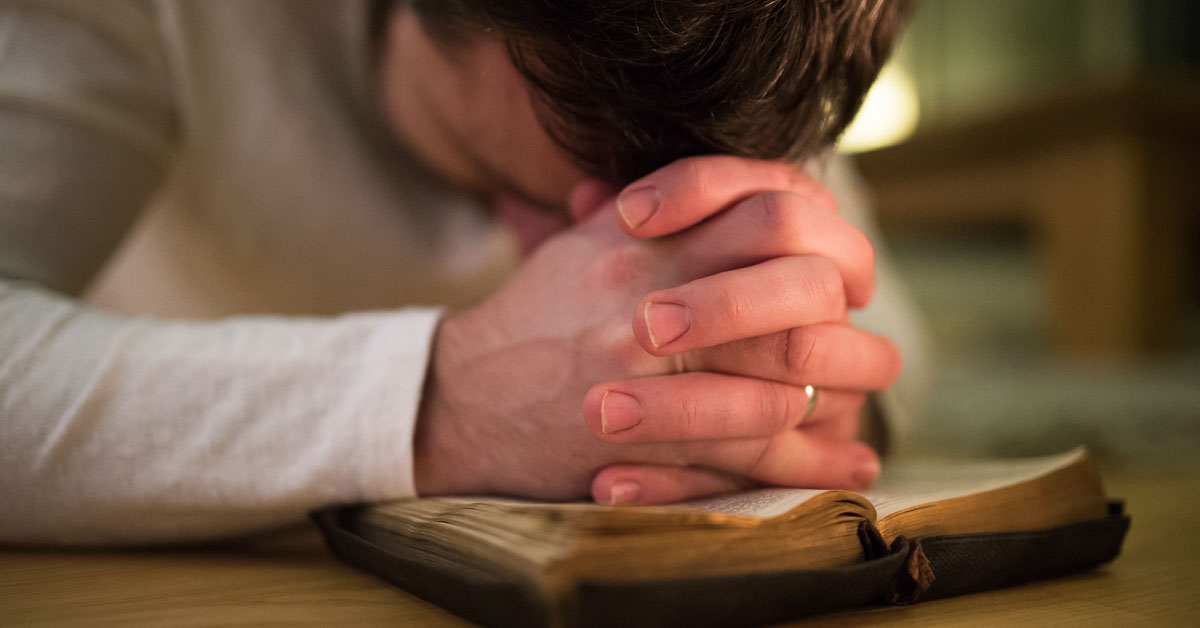
At home and settings other than church, wearing a hat for either is optional based on style and function choices.
In a spiritual setting, such as at church, the New Testament teaching on head coverings rests on a symbolic order that God Himself established. Paul explains in 1 Corinthians 11 that Christ is the head of man, man is the head of woman, and God is the head of Christ. This order is not about superiority, but about representation. In worship, men and women portray different aspects of the relationship between Christ and his church (his faithful followers).
Men should not wear a head covering. Paul states that a man praying or prophesying with his head covered "dishonors his head" (1 Corinthians 11:4). The symbolism was rooted in the ancient priesthood. In the Tabernacle, only the high priest (who foreshadowed Christ) ministered with his head uncovered. The under priests, who pictured the church, wore bonnets, or coverings.
In the Christian assembly, the brothers represent Christ, the antitypical high priest. Therefore, men uncover their heads to acknowledge Christ as their direct head and to reflect his glory openly. To cover the head would blur the picture, suggesting that the man stands under a human or earthly covering rather than under Christ alone.
Women should wear a head covering. Paul teaches that a woman’s covering is a symbol of authority—a visible acknowledgment that she is not the head but stands under headship (1 Corinthians 11:10). This symbol mirrors the church’s relationship to Christ.In Ephesians 5, Paul explains that the relationship between a husband and wife is a picture of the relationship between Jesus and his church. The way a Christian marriage is lived out is a witness to the world and to the angels of the way Jesus and his church relate to each other. Ephesians 5:22-24, “Wives, be subject to your own husbands, as to the Lord. For the husband is the head of the wife, as Christ also is the head of the church, he himself being the Savior of the body. But as the church is subject to Christ, so also the wives ought to be to their husbands in everything.”
A woman’s long hair is her natural glory, but in worship she covers her glory in honor of her husband, who is the glory of God. This act pictures the church, the "bride of Christ," who does not speak on her own authority but listens to and honors her Lord. By covering her head, she demonstrates that the church gives all glory to Christ, not to itself. Long hair alone is not the covering Paul intends. Verse 6 shows that if hair were the only covering, Paul would not instruct women to add another. The additional covering is a deliberate, symbolic act—an outward sign of the church’s joyful submission to Christ.
The early Church recognized that women did not teach in the public assembly (1 Timothy 2:12), yet they did participate in prayer and testimony in appropriate settings. When they did so, Paul required that they be covered, because in these moments they symbolically represented the church speaking under Christ’s authority, not independently.
This practice also honored the “angels”—the elders—who serve as representatives of Christ’s headship within the congregation (Revelation 2:1). The covering visually affirms that the sisters respect the divine order God has placed in the church.
Paul concludes the discussion by saying that if anyone is contentious, “we have no such custom” (1 Corinthians 11:16). This does not abolish the symbol; rather, it shows that head coverings are not a test of fellowship. They are not to become a point of strife or division.
--The symbol is meaningful and appropriate for those who see its beauty.
--It should never be used to judge, exclude or stumble others.
--Love must govern all things, especially matters of lesser weight.
In summary, men and women wear—or refrain from wearing—head coverings in church because of what they represent. Men uncover their heads to portray Christ’s open glory and direct headship. Women cover their heads to portray the church’s loving submission and to honor the divine order God has established. The practice should be symbolic, not salvational; beautiful, not burdensome; unifying, not divisive. It is a picture of the relationship between Christ and his bride, expressed in humility, reverence and love.
Related Questions
November 15th 2014 | 41128 views Is stuttering in the Bible? And is it caused by a demonic spirit?
November 16th 2014 | 46554 views Where do spiritual beings go on Judgment day? A soul is either alive or dead, they go nowhere.
November 24th 2014 | 40417 views Do believers have a higher position than the angels in the kingdom of God?
February 07th 2018 | 41615 views Why did the angels in the dream of Jacob need a ladder if they had wings?
August 22nd 2014 | 41021 views 1 Corinthians 6:3 says we will judge angels. On what basis will we judge these beings?
December 03rd 2015 | 41452 views Are angels mortal?
July 31st 2014 | 42211 views What is an angel? I want to know what angels are like.
July 29th 2014 | 42205 views